
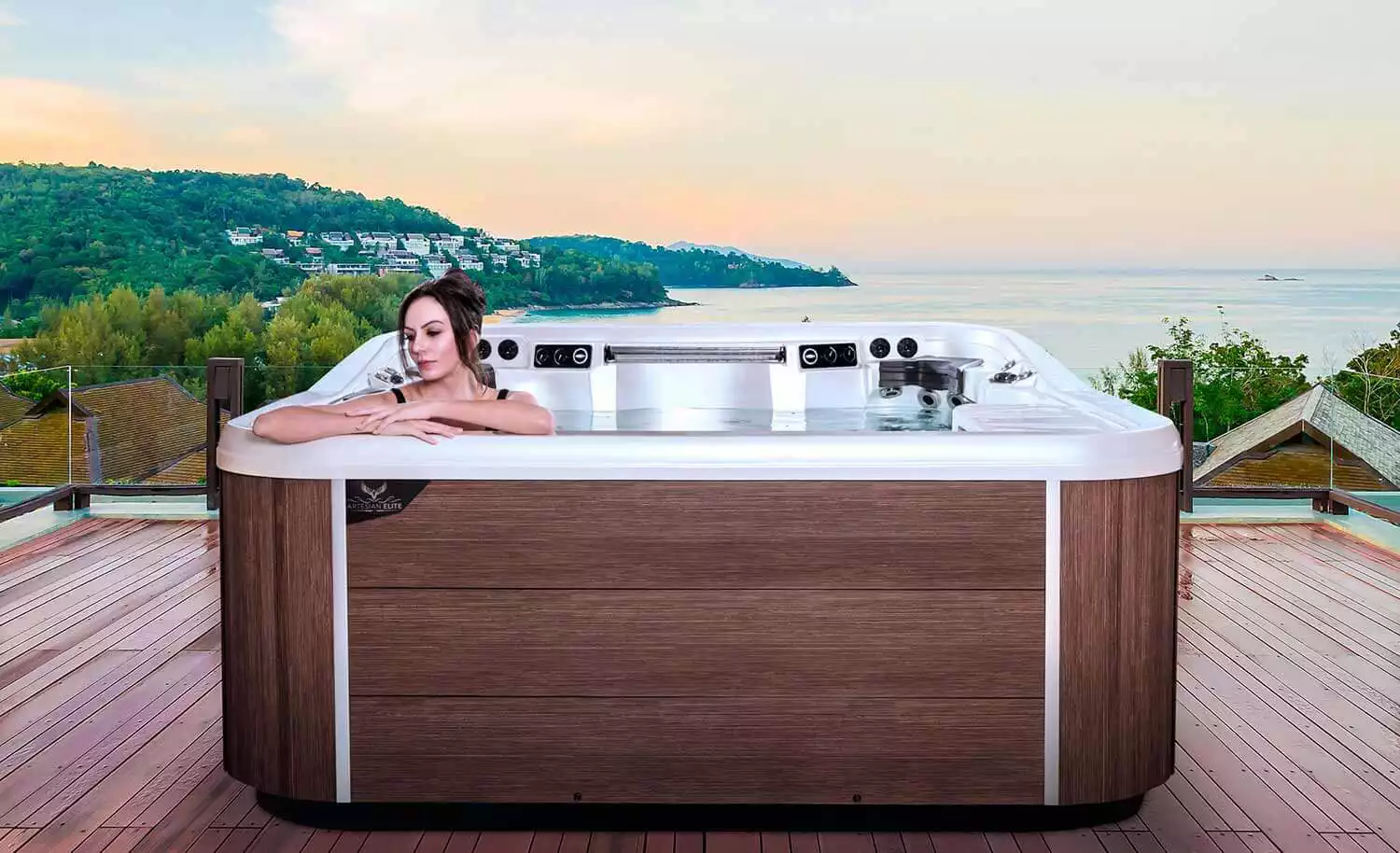
Hot Tub Ownership During Winter in Massachusetts.. Everything You Need to Know
It may be hot now… but when the first freeze warning hits a reasonable question forms: is the hot tub supposed to stay covered until May?
A lot of new hot tub owners in Massachusetts assume winter means downtime. They see the temperature drop, and may decide the safe move is to shut things down. That instinct is understandable, but also at the same time slightly backwards. New England winters for most people, is the best reason to have one.
If properly maintained hot tubs are designed to operate all year-round, and that includes Massachusetts winters that regularly hit single digits. More than that, they perform exceptionally well in cold weather, and the ownership experience in January can be if not better than it is in July. Here’s a quick guide with what you need to know to use yours with confidence, all 12 months of the year. Or if you are on the fence about getting one, hopefully you will walk away with full confidence after reading this.
Hot Tubs are Designed to Perform in Cold Weather
Modern hot tubs are engineered for outdoor installation in four-season climates.The shells, plumbing, and insulation systems on brands like Jacuzzi® and Hydropool are specifically designed to maintain water temperature efficiently even when the ambient temperature outside drops below freezing.
The mechanics of this are straightforward: the heater runs more frequently in winter, but the cabinet insulation and cover reduce heat loss enough that the energy cost increase is less dramatic than most people expect.
Hot Spring and Jacuzzi® models use full-foam insulation systems that wrap the plumbing and shell, creating a thermal envelope that dramatically limits heat escape through the cabinet walls. When you pair that with a tight-fitting cover in good condition, the hot tub essentially holds its temperature between uses with minimal heater cycling.
The short answer: yes, you can absolutely use a hot tub in a Massachusetts winter. The follow-up answer: the experience, slipping into 102°F water while snowflakes fall around you, is one most hot tub owners describe as their favorite part of ownership.
What Happens When You Don’t Maintain It in Winter
The great news is that it is better for your Hot tubs longevity and overall health to be used regularly over Winter, rather than sitting there empty… The problems don’t come from the cold itself, they come from water that stops moving in a system that isn’t designed for standing water in freezing conditions.
Important Note: If a hot tub loses power during a cold snap and the water sits motionless, pipes can freeze and crack within hours. This is the scenario most people fear, and it’s a legitimate one. The key word, though, is ‘powerless.’ A hot tub that is powered on, maintaining temperature, and circulating water will not freeze. The circulation pump and heater are the antifreeze. Keep the power on and the system running, and you’re protected.
The One Rule That Prevents Winter Damage
Never cut power to a hot tub in winter. If you’re going away for two weeks, leave it on. If the power goes out, check on it as soon as power is restored. Most modern hot tubs have a freeze protection mode that activates the circulation pump automatically when the temperature drops below a certain threshold, even if the system is in economy mode.
If you genuinely won’t be using a hot tub all winter and want to avoid the operating cost, the right move is a proper winterization service, not simply turning it off and hoping for the best. St. Cyr Pool & Spa offers hot tub winterization as a professional service for Essex County and the North Shore, ensuring the water is fully drained and the plumbing is cleared before temperatures drop.
Cover Care: Your Most Important Winter Asset
Your hot tub cover is doing serious work in winter. A high-quality cover keeps heat in, moisture out, and the load of snow off your water surface. If your cover is old, waterlogged, or cracked, winter is when its failure becomes costly.
Covers absorb moisture over time, and a waterlogged cover becomes heavy and loses most of its insulating value. In Massachusetts, where snow loading is a real factor, a compromised cover can also sag under snow weight until it makes contact with the water surface. That’s both a maintenance problem and an eventual failure point for the cover’s foam core.
Signs Your Cover Needs Replacing Before Winter
Check these indicators before the cold season sets in:
- Weight: Lift one end of your cover. If it’s noticeably heavier than it was when new, the foam core has absorbed water and is no longer insulating properly.
- Cracks or tears in the vinyl: Even small surface cracks allow moisture in and accelerate internal waterlogging.
- Sagging center: If the cover dips in the middle, the foam has broken down at the hinge point. Replace it before it sags into the water.
- Odor: A musty smell from the underside of a cover often indicates trapped moisture and early mold growth in the foam.
A good cover is one of the highest-return accessories you can invest in. A cover that adds R-value in winter pays for itself in energy savings within a season or two.

Water Chemistry in Cold Temperatures
One of the overlooked aspects of winter hot tub ownership is that cold weather affects water chemistry in ways that don’t apply in summer. The most important one: lower ambient temperatures slow the rate at which sanitizers activate and dissipate.
In practice, this means your water can appear clean while harboring imbalance that a warmer-season owner would catch faster. The takeaway is not that winter water chemistry is harder, just that it requires the same discipline regardless of how often you’re soaking. Check your pH, alkalinity, and sanitizer levels at least twice a week, even in January.
Another cold-weather consideration: evaporation slows in winter, so you’ll add less water to compensate for water loss. But rain and snowmelt can introduce imbalanced water if the cover isn’t sealing well. A tight, maintained cover prevents most of this, but it’s worth checking after significant snow events that load the cover and potentially allow melt to seep underneath the edges.
Contact us today for a Hot Tub Service..
The Winter Soak Experience: Why Cold Weather Makes It Better
There’s a physiological reason that hot tubbing in winter feels distinctly more satisfying than in summer, and it comes down to the temperature differential between the water and the air around you.
When the air temperature is 25°F and the water is 102°F, the contrast between the two environments is immediate and total. Your body responds to the warm water immersion far more dramatically than it does when the air temperature is 80°F and the contrast is modest. Stress hormones drop faster. The warmth registers deeper. The shift from tense to relaxed is more pronounced.
Many hot tub owners who use theirs year-round say the same thing: December and January sessions, under a dark sky with cold air on your face and warm water everywhere else, are the sessions they look forward to most. The experience has a distinctly different quality from summer soaks, and for many people, it becomes a genuine seasonal ritual, not just maintenance use.
Scheduling Your Hot Tub for Year-Round Use
A few practical habits make winter hot tub ownership consistently enjoyable rather than a chore.
- Pre-heat before you plan to soak. Most hot tubs maintain their set temperature continuously, but if yours is in economy mode, kick it up to full temperature 30 to 45 minutes before you plan to get in. Cold weather means a slightly longer warm-up from economy set-points.
- Keep a dedicated hook or storage spot near the door. A fluffy robe and warm slip-on shoes right inside the door makes the transition from hot water to warm house effortless. This small detail is the difference between a winter soak feeling like an adventure and feeling like an ordeal.
- Clear snow from the cover with a soft brush, not a shovel. A light broom or foam brush is enough for most Massachusetts snowfall. Avoid sharp tools that can scratch or nick the vinyl surface.
- Check the cover seal after heavy snow or ice events. Run your hand along the edge skirt to make sure it’s fully seated and not allowing warm air to escape.
Frequently Asked Questions
Do I need to do anything special to prepare my hot tub for winter in Massachusetts?
If you’re keeping it running through winter, the main tasks are inspecting and if necessary replacing your cover, verifying your insulation is intact, and maintaining a consistent water care schedule. If you’re winterizing it instead, that process requires full draining and air-blowing the plumbing lines, which our service team at St. Cyr can handle professionally.
Will my hot tub freeze if the power goes out?
Potentially, yes, if the outage lasts long enough in below-freezing temperatures. Modern hot tubs have freeze protection modes that run the pump automatically, but those require power. If you experience an extended outage in winter, contact your hot tub dealer or service provider immediately. Most freeze damage happens within 24 hours in extreme cold.
Is it safe to use a hot tub when it’s snowing?
Absolutely. Snow adds to the sensory experience rather than creating a hazard. The only caution is visibility, keep the path between your house and the hot tub clear of ice, and consider a non-slip mat near the steps. Beyond that, soaking while it snows is one of the genuine pleasures of hot tub ownership in New England.
What temperature should I keep my hot tub at in winter when I’m not using it?
The general recommendation is to keep it set no lower than 80°F even when not in use, and many owners keep it at full soak temperature (100°F to 104°F) year-round for simplicity and faster warm-up. The energy cost of maintaining 80°F versus 102°F is modest with a good cover, and a ready-to-soak hot tub gets used far more consistently than one that requires 45-minute warm-ups.
How do I find hot tubs for sale in North Shore, MA?
St. Cyr Pool & Spa is the North Shore’s most established hot tub dealer, with a full showroom at 263 South Main Street in Middleton, MA. We carry Jacuzzi®, Nordic Hot Tubs, Hydropool, and DreamMaker Spas, and our team can help you select a model with the insulation and cover specifications right for Massachusetts winters.
Year-Round Hot Tub Ownership Starts With the Right Model
The most important factor in successful winter hot tub use is buying a model engineered for it. Insulation quality, heater efficiency, and cover design vary significantly between brands and price points, and those differences matter most in January, not July.
At St. Cyr Pool & Spa, we’ve been helping Massachusetts and New Hampshire homeowners choose, install, and maintain hot tubs through New England winters for over 50 years. We know what lasts, what struggles, and what to look for when you want an investment that performs on the coldest night of the year just as well as the warmest evening in August.
Contact us to schedule a showroom visit or speak with our team about which models are best suited for year-round outdoor use in your area.